Three ways students build real connections across 4,500 km of distance.
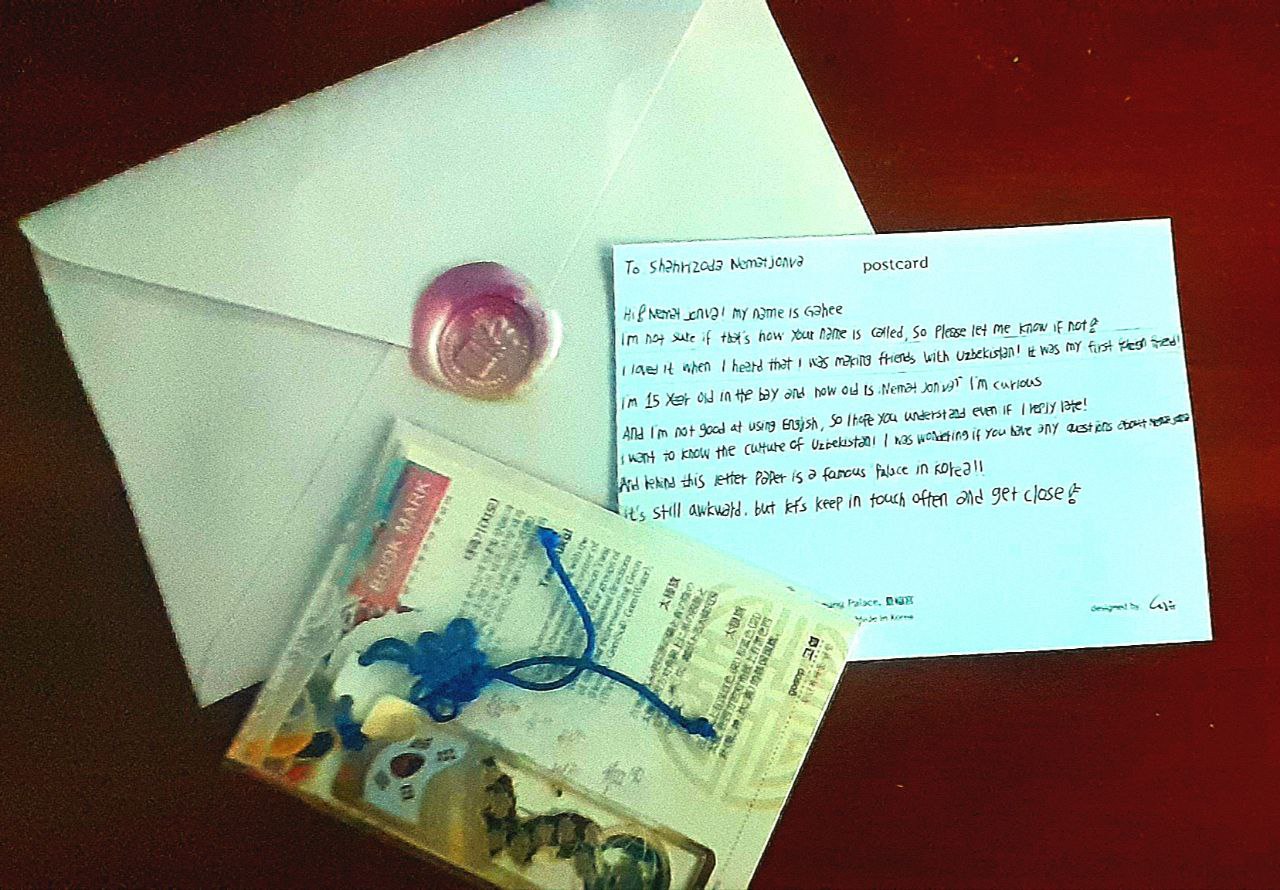
Every participant is matched with a student from the partner school. They exchange handwritten letters over the course of the academic year — a slow, intentional form of communication that builds genuine understanding.
Letters are written in the student's native language, with a short translation or explanation provided. The format encourages honesty, vulnerability, and curiosity.
"In my first letter I wrote three sentences. By December I was filling four pages. I didn't realize how much I had to say until someone across the world was listening."
— Dilnoza, Samarkand, 2024
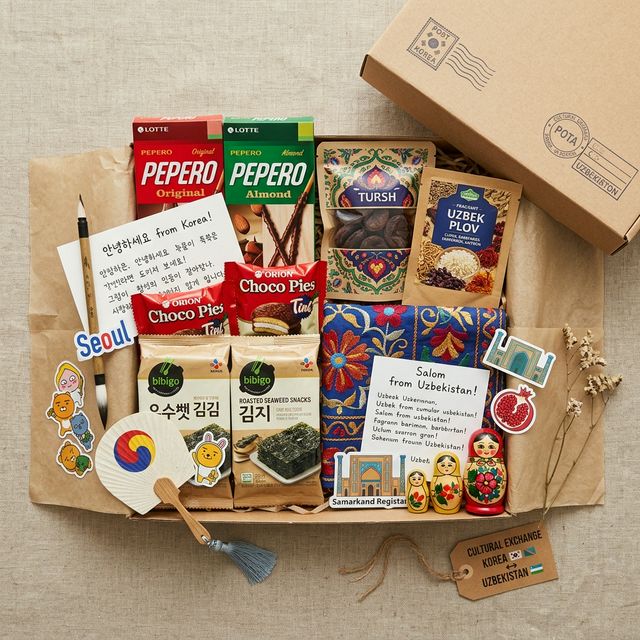
Each December, students pack a box of everyday Korean or Uzbek life and mail it to their partner school. The boxes arrive before winter break and are opened together in a shared online session.
No instructions. No curated "tourist" items. Just what the student actually loves — the snack they eat every afternoon, the craft their grandmother taught them, a music playlist QR code.
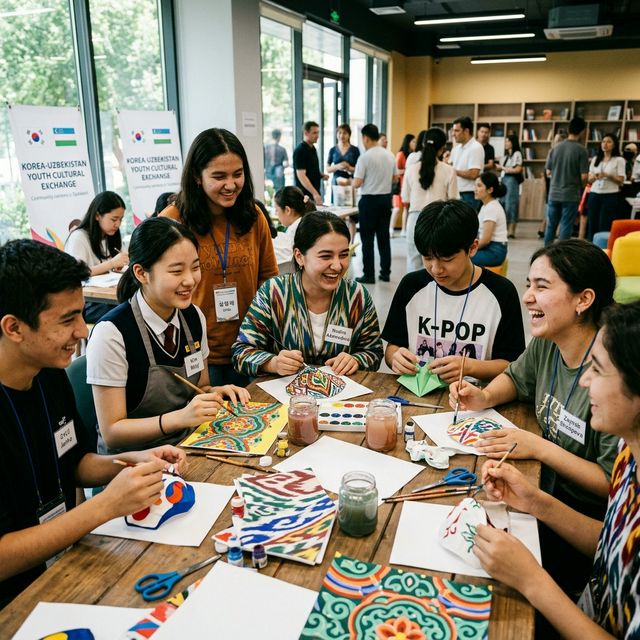
Monthly online sessions bring both schools together for structured (and unstructured) fun. Past sessions have included virtual cooking challenges, art swaps, language games, and joint student panels.
Both schools cook the same dish from each other's cuisine at the same time on video call.
Students learn to make traditional crafts — Korean hanji paper art, Uzbek suzani embroidery patterns.
Teams compete to learn words in Korean, Uzbek, and English. Charades, quiz games, and more.
Open Q&A session: "Ask me anything about life in Korea / Uzbekistan." No filter, real answers.